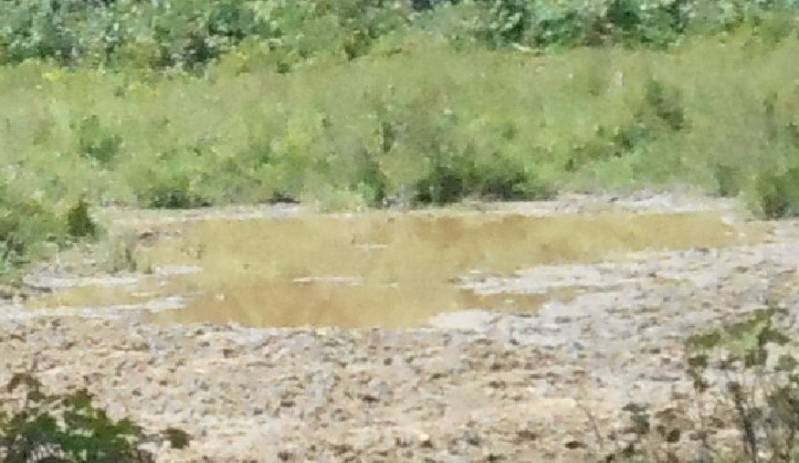
Clearing are open areas surrounded by a more or less dense forest. In the National park of Mbam and Djerem, they are usually appreciated by animals due to salt and water abundance compared to other sites of the forest. The presence of salt, reason why those clearings are called "salines", attract mammals, and specially ungulates and elephants finding a better quality fodder. A one month period training (August 2015) brougth me to carry out a descriptive study of these ecosystems. One approach has been the use of aerial photographs taken from helicopter with high resolution cameras available at WCS (Wildlife Conservation Society) headquarter around the study location; another has been the fixation of camera devices branded "Bushnell" on specific points with a nice view on the saline.
Five clearings as shown on the map were chosen to be visited in order to get on-site descriptive information. Two salines were visited at Pkayere, a site located 3 km away from the bank of the Djerem, one of the main stream crossing the national park. Three other were selected to the west side of the park (see the map). Descriptive criteria were: vegetation, soil, topography, hydrology, frequentation by wildlife, etc. A great number of wildlife species were observed on site among which the main were: elephants, Bongos (Boocerus eurycerus), Sitatungas (Tragelaphus spekii), animals from the Suidea family. Vegetation species were identified and the most important were: Cyperus ssp (Cyperaceae), Maranta sp. (Marantaceae), Mimosa pigra (Mimosaceae), Uapaca guineensis (Euporbiaceae), Berlinia sp. (Fabaceae), and several liana species. They are adapted to a tropical humid and lowland forest, and receive generous amount of rainfall over the year.
Most important is the potential those sites constitute for ecotourism and for researchers seeking a better understanding and improve of conservation strategies within tropical forests. One challenge remains to improve observation techniques, as camera devices are sometimes destroyed by animals resulting in missing data during biomonitoring operations. With the active presence of authorities in charge of the national park, those issues are prioritised and efforts can be observed to raise the values of clearings, which are considered as hotspot of biodiversity within the national park.
This was one of the best experience I have ever had with roller coaster emotional memories, due to hard conditions during several days out of the civilisation, but at the same time with amazing feelings and discovery.
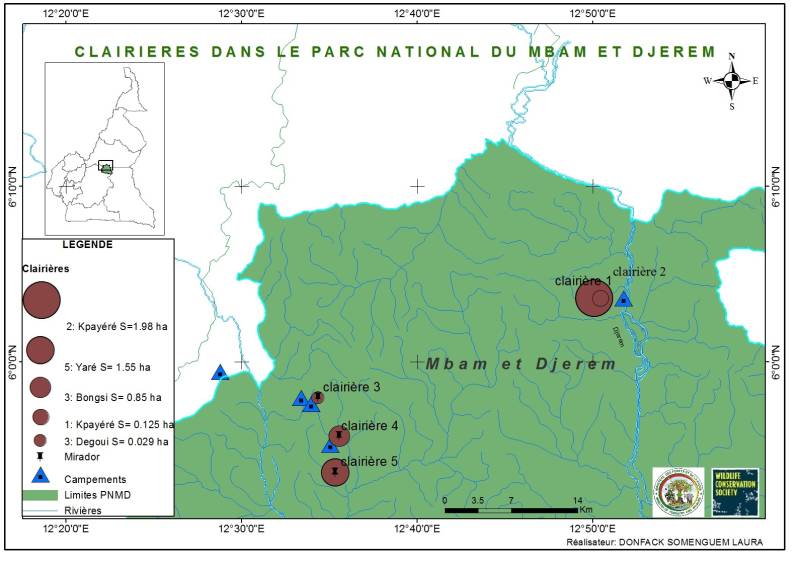
Map 1: location of the studied salines within the Park
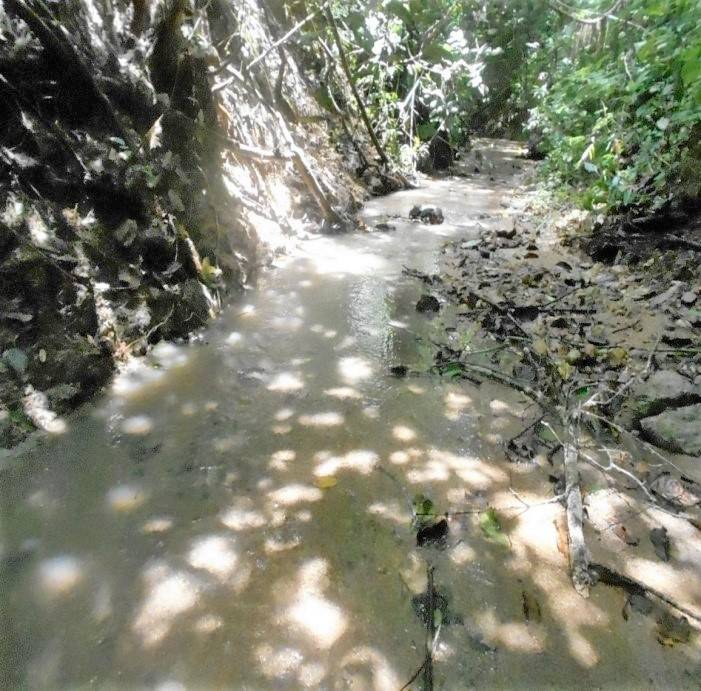
Figure 2: One stream around a saline
Add comment
Comments