
In 2017, a vegetation study of two National parks of the soudano-sahelian zone in Cameroon have been carried out through a one month period data collection, as part of activities engaged for respective management plans update, with the financial and technical support of the german cooperation. Bouba Ndjida (200 000 ha) and Benue (180 000 ha) are two protected areas classified as national parks with a great potential for ecotourism and research, but also threatened by several issues. In fact the main problems encountered, overgrazing, illegal wood harvesting and poaching have recently induced a fall of the wildlife and plant diversity, consequently affecting other sectors: economy, socio-cultural habits.
A state of species diversity and distribution has been done, with identification of major pressure through signs directly observed on the field. Additional descriptive characteristics related to the topography and soil, as important patterns influencing vegetation growth, were also of interest. The main tasks I was assigned to execute among which, mapping, field sheet design, assistance in species identification, brought me to understand how complex the two parks are. If the fire set a month before the inventory, had enabled an easier evolution from a transect to the other, it had also affected results from the census. Field work within the two national park at that time wouldn't have been possible without the presence of forest rangers as part of the team; without diving into details, poaching and pastoral activities are the main reason. 131.5 km distance covered in Bouba Ndjida and 40 km in Benue national parks, resulted in respectively 95 and 34 stations for data Collection.
The main species, representative of vegetation of the sudano-sahelian zone were: Cassia mimosoides, Diheteropogon amplectens, Piliostigma thonningii, Tephrosia pedicellata, Pennisetum unisetum, Terminalia laxiflora, etc. As previously evoked, overgrazing around the national park is an issue, leading to introduction of cattle herds within borders of national parks. Cattles feeding not only on grasses but also on leaves from woody species become a threat, wildlife habits are also disturbed by the cattle presence inside national parks. Biodiversity is obviously at risk and strategies to tackle the problem are primarily developed.
Sensitisation is a fastidious task when it happens that people majorly depend on an activity threatening the protected area. Should we get discourage when no much changes result from the actions engaged in conservation? should we take drastic measures, using violence at the limit to install a general fear of breaking the law ? I believe the key lies on dialogue with the right target. In fact efforts have been done and are still on going to sensitise children, women and men (especially cattle breeders) to raise their understanding of the problem. On another side, they might be aware of how negatively their action can impact on biodiversity, but have not enough alternative. Identification and convincement to apply new activities as replacement to cattle breeding, charcoal production and other threats, is the great challenge. The problem is not specific to the North of Cameroon but also other countries of the sudano-sahelian region, sharing similar, climatic and socio-cultural conditions.
Dialogue and experience sharing between management authorities of protected areas and representatives of local communities within and between different countries are efficient ways to minimise the pressure which has done more harm than expected few years ago. Let's stay optimistic ...

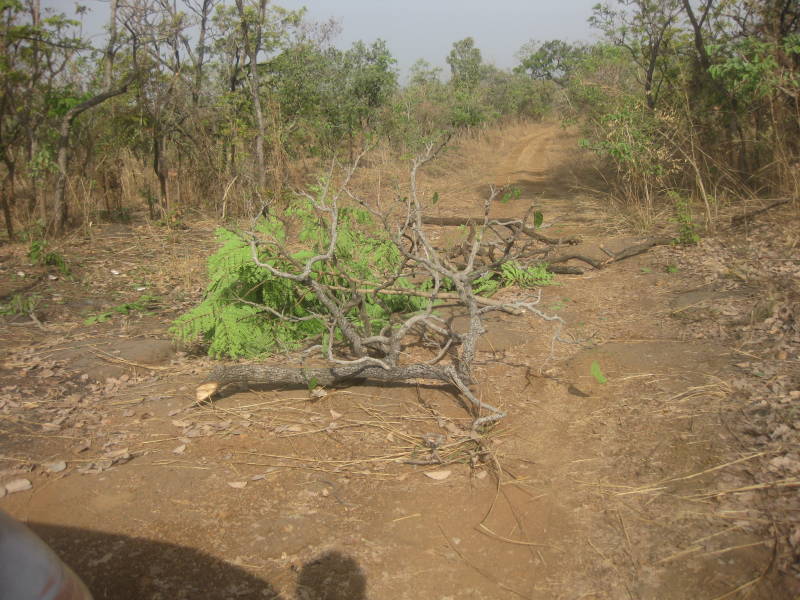
Figure 1: The inventory team
Figure 2: A branch cut down to feed cows found on the way to the national park
Add comment
Comments