The Douala Edea Forest Reserve is located in the littoral region of Cameroon, in the west side, and is a reservoir of biodiversity developing within a wide and complex mangrove ecosystem. It is an emergency to preserve them and for that reason, the regeneration of community mangroves has been implemented in several villages within the Douala Edea Wildlife Reserve.
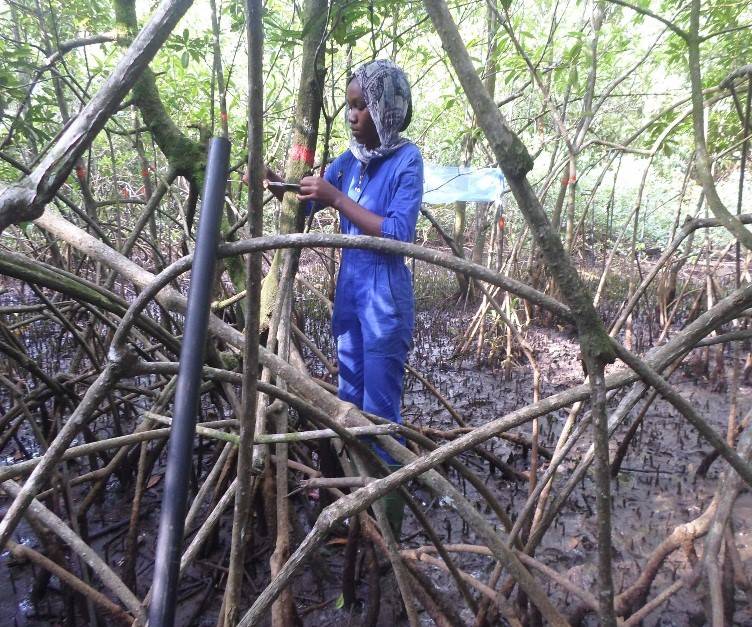
During, my master thesis, I was assigned to compare regeneration efficiency under different regeneration treatments in three villages namely: Yoyo 2, Youmé 2 and Bolondo. Permanent plots were set with a well designed method and dendrometric variables were measured within each. Soil, litter and water samples were also collected for chemical analysis, to measure the carbon content for the considered stands.
Interesting was to observe that the carbon stock was higher in the soil compared to the above ground content. On equal aged plots, the regeneration treatment by nursery performed very well compared to the one by direct pricking of seedlings. Natural regeneration treatment performed well too.
The main genus considered, Rhizophora and Avicennia, which are characteristics to mangrove ecosystems, have a wide range of utilization for local communities (fire wood, construction material, fencing, etc.). For that reason, the sustainability of ressources, wildlife included, is threatened.
With the support of national organizations such as the Cameroon Wildlife Conservation Society (CWCS), communities are sensitised, and supported to learn about easy and efficient methods of regeneration to save mangroves which undoubtfully are vital for the planet.
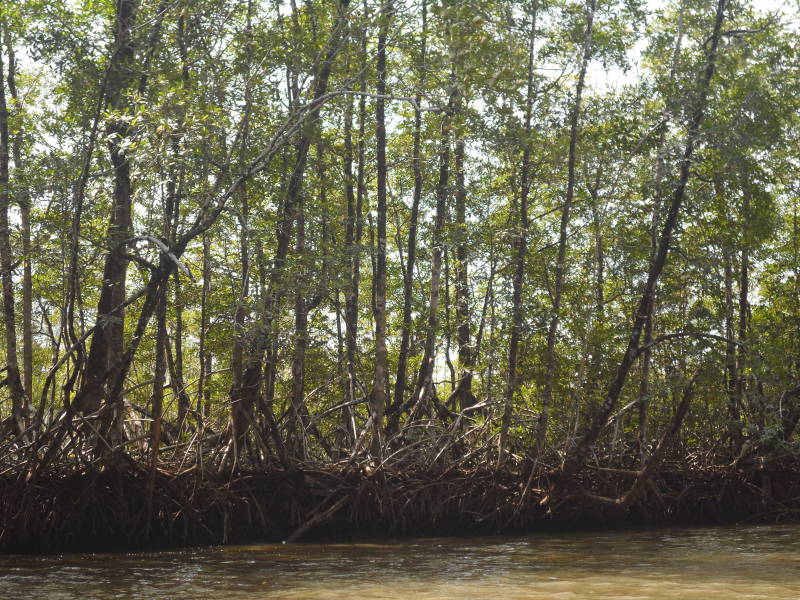
A mangrove stand in the Douala Edea reserve
During measurements on a plot
Add comment
Comments